
How to Choose a Solitaire Ring: Stone Shape, Size and Ring Size
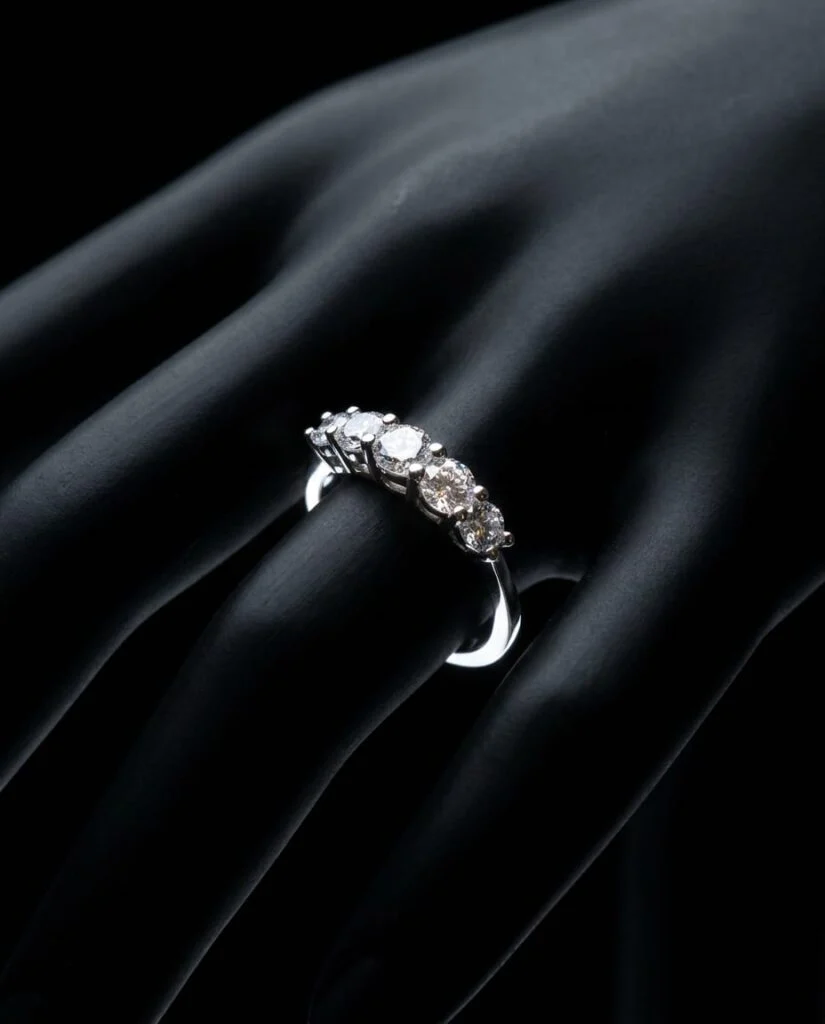
A solitaire ring, a single stone in the center, is the most classic design for an engagement ring or a gift ring. But within that simplicity there are many decisions: shape, size, setting and ring size. Here is how to choose well.
Stone shape
- Round: the most brilliant and classic, a choice that never goes out of style.
- Oval: lengthens the finger and looks larger than a round stone of the same weight.
- Pear: romantic and distinctive, also lengthens the finger.
- Square (princess): modern and geometric.
- Emerald cut: elegant and vintage, less sparkle and more of a mirror-like shine.
How big should the stone be?
For a round stone, the common sizes (diamond equivalent) are:
- About 5 mm: half a carat, delicate and good for everyday wear.
- About 6.5 mm: one carat, the most popular size.
- About 7.5 mm: one and a half carats.
- About 8 mm: two carats.
- About 9 mm: three carats, very striking.
With moissanite you can get a large stone at an accessible price. We covered the differences in moissanite vs diamond.
Setting type
- 4 prongs: shows more of the stone and lets in lots of light.
- 6 prongs: a more secure hold that makes a round stone look even rounder.
- Halo: a ring of small stones around the center stone that boosts its presence.
- Bezel: a metal rim around the stone, modern and well protected.
How do you know your ring size?
Every ring page on our site has a ring size tool. A few tips: measure in the evening, when your finger is slightly larger; for a wide band, go half a size up; and if the ring is a surprise, borrow a ring she already wears and measure its inner diameter.
Metal: silver or gold plating?
White 925 silver brings out the brilliance of a white stone, while gold plating gives a warm, vintage look. It is best to choose a metal that matches the rest of the jewelry she wears.
See examples: the classic moissanite solitaire ring, the five-stone ring, and all silver rings for women.